



What is Communication Plan?
A Communication Plan is a structured and organised document that outlines the strategy and approach for effective communication within a project, organisation, or specific initiative.
It is a vital component of project management and helps ensure that all stakeholders are kept informed and engaged throughout the project lifecycle. The Communication Plan defines the who, what, when, where, and how of communication activities.
Effective Communication Plan for Disaster Events
In times of disaster, effective communication becomes paramount for organisations to navigate the challenges and provide crucial information to various stakeholders. A well-defined communication plan serves as a guiding framework, ensuring that management, employees, vendors and suppliers, customers, compliance authorities, and the media receive timely and accurate updates.
This communication plan aims to establish clear channels, messaging strategies, and responsibilities for each party involved. By implementing this plan, companies can proactively address concerns, maintain transparency, and foster trust in the face of adversity.
Objective of the Effective Communication Plan for Disaster Events
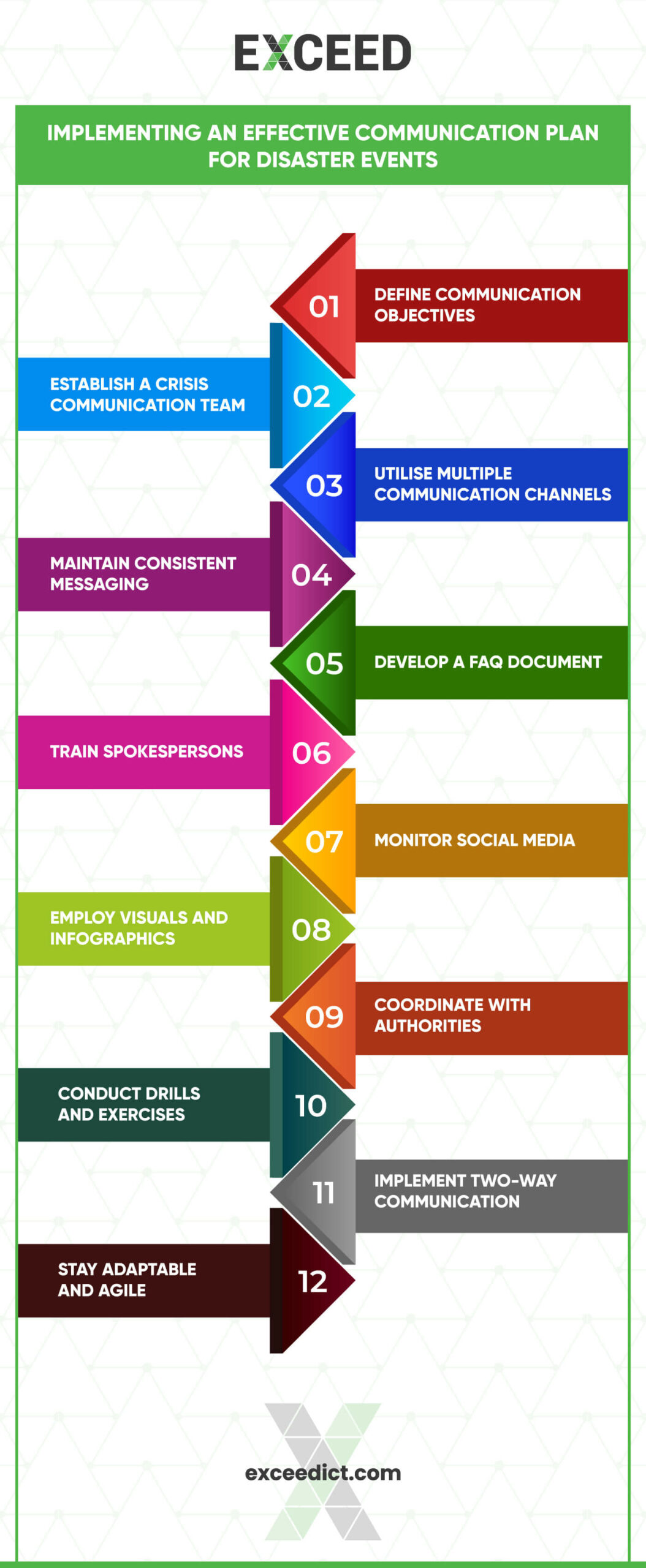 The objective of this communication plan is to ensure timely and effective dissemination of information to key stakeholders during a disaster event. The plan aims to provide clear guidelines for communication channels, messaging, and responsibilities for each party involved.
Management:
- Designate a spokesperson from the management team who will be responsible for communicating with internal and external stakeholders.
- Establish a clear chain of command and decision-making process during the disaster event.
- Provide regular updates to management regarding the situation, response efforts, and any significant developments.
- Hold regular meetings or conference calls to keep management informed and address any concerns or questions they may have.
Employees:
- Develop an emergency contact list that includes all employees’ contact details, including alternate phone numbers and email addresses.
- Establish an internal communication system to disseminate information quickly and efficiently (e.g., company intranet, email, text messages).
- Provide regular updates to employees regarding the status of the situation, any changes to work arrangements or schedules, and any specific instructions or safety measures.
- Ensure that employees are aware of their roles and responsibilities during the disaster event.
- Encourage two-way communication, allowing employees to ask questions or share concerns.
Vendors and Suppliers:
- Maintain an up-to-date contact list of vendors and suppliers.
- Establish a designated point of contact within the company who will communicate with vendors and suppliers during the disaster event.
- Inform vendors and suppliers about the situation and provide them with any necessary instructions or updates regarding deliveries, services, or alternative arrangements.
- Keep vendors and suppliers informed about the company’s recovery plans and timelines, as applicable.
Customers:
- Develop a customer communication strategy that includes multiple channels (e.g., website, social media, email, phone).
- Prepare pre-approved templates or messages for different scenarios, ensuring clear and consistent communication.
- Notify customers about any disruption to services, delays, or alternative arrangements.
- Provide regular updates on the progress of resolving the issue and any steps taken to minimise customer impact.
- Establish a dedicated customer support team to handle inquiries and provide assistance during the crisis.
Compliance Authorities
- Identify the relevant compliance authorities or regulatory bodies that need to be informed during a disaster event.
- Assign a responsible person or team to communicate with compliance authorities and provide them with updates on the situation and any necessary reports or documentation.
- Comply with any legal requirements or obligations for reporting incidents or seeking approvals.
The Media:
- Designate a media spokesperson who will be responsible for communicating with the press and media outlets.
- Prepare a media kit containing key company information, statements, and contact details.
- Establish a media monitoring system to track coverage and respond to any inaccuracies or misinformation.
- Hold regular press briefings or issue press releases to keep the media informed of the situation, response efforts, and any significant updates.
- Coordinate interviews or media appearances as necessary, ensuring consistent messaging.
Additional Considerations:
- Establish a backup communication system in case primary channels become unavailable.
- Ensure that all communication channels and contact lists are regularly updated.
- Conduct drills or simulations to test the effectiveness of the communication plan.
- Provide training to employees on their roles and responsibilities regarding communication during a disaster event.
- Continuously evaluate and improve the communication plan based on lessons learned from previous incidents.
Remember, clear and timely communication is crucial during a disaster event to instil trust, minimise confusion, and facilitate an efficient response. Regularly review and update this communication plan to adapt to evolving circumstances and technologies.
In conclusion, a well-executed communication plan is an indispensable asset during disaster events. By keeping stakeholders informed and fostering transparency, organisations can effectively navigate challenges and build trust. Timely and accurate communication remains the key to successfully overcoming adversities and ensuring a cohesive response.
FAQs (Frequently Asked Questions) and Answers:
Why is a Communication Plan crucial during disaster events?
A Communication Plan ensures timely and accurate information reaches stakeholders, fostering transparency and trust amidst challenges.
How can employees stay updated during a disaster?
Employees can receive timely updates through internal communication systems like the company intranet, emails, and text messages.
What steps are taken to keep customers informed during disruptions?
We have a customer communication strategy with various channels (website, social media, email) to provide updates on service disruptions and alternative arrangements.
How is media coverage managed during a disaster event?
We designate a media spokesperson to communicate with the press, issue press releases, and hold regular briefings to ensure accurate information is shared.
What measures are in place to comply with regulatory bodies during disasters?
We have assigned a team to communicate with compliance authorities, providing them with updates and necessary reports, fulfilling our legal obligations.
Call us on 1300 832 639 or simply search “Exceed ICT” on Google Maps to find a location near you and connect with our team today.
We also provide
Telecoms Expense Management, Device Deployment, Fleet management, Telstra enterprise Mobility, Telstra mobility Managed Services.
Improve Business Core values, Business Consulting, Network Management, Telstra Expense Management and many more Services.