


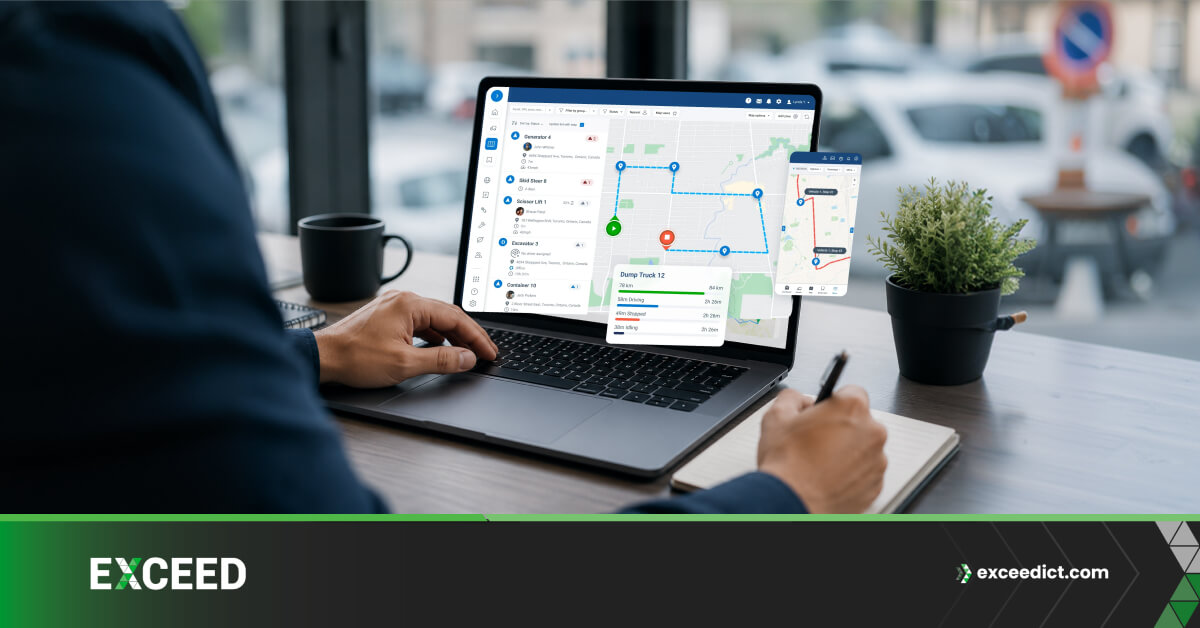
Businesses must manage vehicle procurement, maintenance, fuel costs, driver safety, compliance requirements, registrations, and asset replacement while controlling expenses and maintaining productivity. As fleets grow, these responsibilities become increasingly complex and time-consuming. This is where fleet management services provide significant value. By combining advanced technology, telematics, vehicle lifecycle management, and professional support, fleet management services help businesses streamline operations, reduce costs, improve safety, and maximise vehicle performance.
Modern fleet management solutions provide real-time visibility into fleet operations, enabling businesses to make informed decisions based on accurate data rather than assumptions. From GPS tracking and maintenance scheduling to fuel management and compliance reporting, these services help organisations gain greater control over their vehicle assets while reducing administrative workloads.
This guide explores how fleet management services work, the key solutions available, and how Australian businesses can benefit from smarter fleet operations.
What Are Fleet Management Services?
Fleet management services are professional solutions designed to oversee and optimise a business’s vehicle fleet throughout its entire lifecycle. These services combine technology, administration, operational support, and strategic planning to ensure vehicles remain productive, compliant, and cost-effective.
Rather than managing every aspect of a fleet internally, businesses can partner with fleet management providers that handle vehicle-related administration and operational tasks on their behalf.
Fleet management services commonly include:
- Vehicle procurement and financing
- Fleet leasing solutions
- GPS tracking and telematics
- Maintenance management
- Fuel management
- Driver safety monitoring
- Registration and compliance management
- Accident and roadside assistance support
- Vehicle disposal and replacement
The objective is to improve efficiency, reduce costs, and allow businesses to focus on their core operations rather than day-to-day fleet administration.
Why Fleet Management Is Important for Businesses
 For organisations that rely on vehicles, fleet-related expenses often represent one of the largest operational costs.
Without effective fleet management, businesses may experience:
- Rising fuel expenses
- Excessive vehicle downtime
- Increased maintenance costs
- Poor vehicle utilisation
- Compliance risks
- Driver safety concerns
- Administrative inefficiencies
Fleet management services address these challenges by providing systems and expertise that help businesses optimise every aspect of fleet performance.
The result is improved productivity, better resource utilisation, lower operating costs, and stronger compliance outcomes.
How Fleet Management Services Work
Vehicle Procurement and Financing
Fleet management begins with selecting the right vehicles for operational requirements.
Fleet providers assist businesses with:
- Vehicle selection and specification
- Fleet purchasing strategies
- Bulk purchasing discounts
- Vehicle financing arrangements
- Lease management
- Electric vehicle transition planning
Businesses can access flexible funding options such as operating leases, novated leases, and commercial finance solutions that help preserve cash flow while maintaining access to modern vehicles.
Strategic procurement ensures organisations invest in vehicles that deliver the best balance of performance, reliability, and total cost of ownership.
GPS Tracking and Telematics
Telematics technology has become one of the most valuable tools in modern fleet management.
GPS tracking systems provide real-time visibility into fleet activity, allowing managers to monitor:
- Vehicle locations
- Route efficiency
- Driver behaviour
- Vehicle utilisation
- Travel history
- Idle time
- Fuel consumption
This information helps businesses identify inefficiencies and implement improvements that reduce costs and improve productivity.
For example, route optimisation can reduce unnecessary travel distances, lower fuel usage, and improve delivery schedules.
Maintenance and Vehicle Servicing
Vehicle downtime can significantly impact business operations and customer service.
Fleet management services help minimise disruptions through proactive maintenance programs.
These services typically include:
- Scheduled servicing
- Preventive maintenance planning
- Service reminders
- Repair coordination
- Tyre management
- Roadside assistance
- Breakdown support
By maintaining vehicles according to manufacturer recommendations, businesses can reduce unexpected failures and extend vehicle lifespan.
Predictive maintenance programs also use vehicle data to identify potential issues before they develop into costly repairs.
Fuel Management and Expense Control
Fuel remains one of the largest operating expenses for most commercial fleets.
Fleet management providers help businesses gain better control over fuel spending through:
- Fuel card programs
- Fuel transaction monitoring
- Consumption reporting
- Driver performance analysis
- Route optimisation
- Idle time reduction
Detailed reporting helps businesses identify areas where fuel efficiency can be improved, leading to substantial cost savings over time.
Centralised expense management also simplifies accounting and reporting processes.
Compliance and Administration
Managing fleet compliance requires significant time and attention.
Fleet management services assist businesses with:
- Vehicle registrations
- Licensing requirements
- Fringe Benefits Tax (FBT) reporting
- Toll management
- Infringement processing
- Safety inspections
- Compliance documentation
Automating these processes reduces administrative workloads while helping businesses meet regulatory obligations and avoid costly penalties.
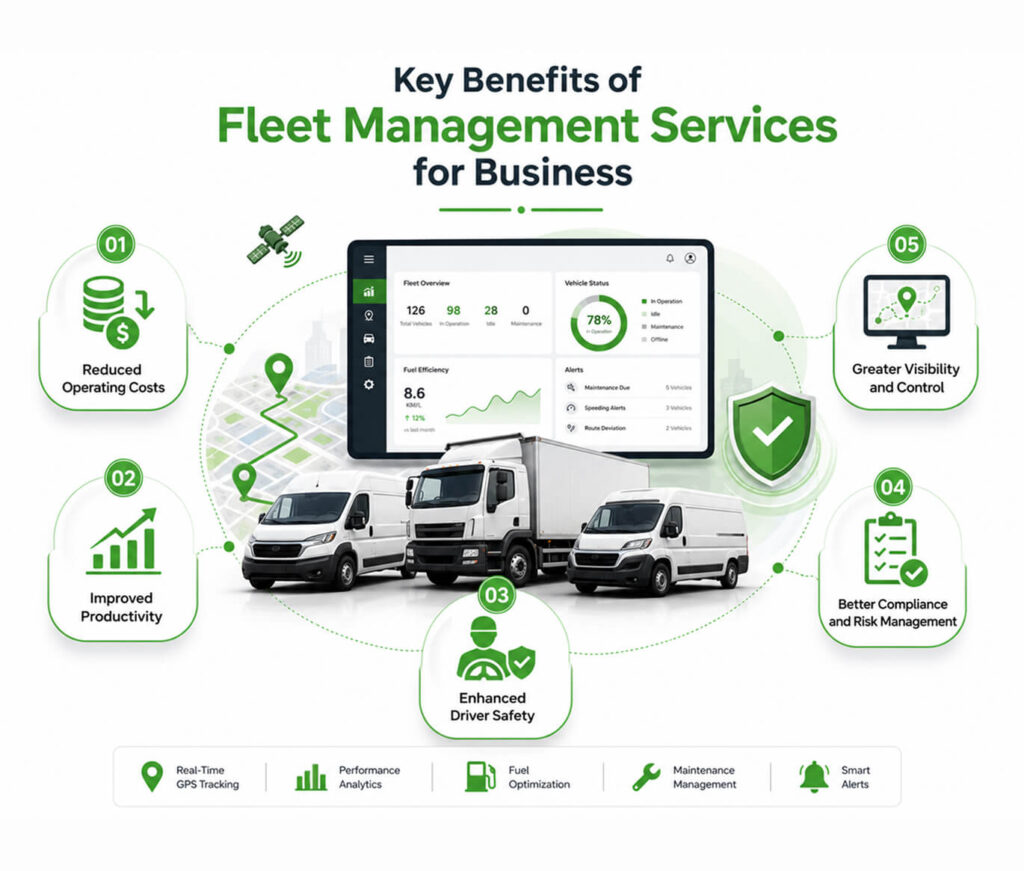
Key Benefits of Fleet Management Services for Business
Reduced Operating Costs
 One of the primary reasons businesses invest in fleet management services is cost reduction. By improving vehicle utilisation, reducing fuel consumption, minimising downtime, and controlling maintenance expenses, businesses can significantly lower overall fleet operating costs. Access to fleet purchasing discounts and negotiated supplier rates further enhances savings.
Improved Productivity
Real-time visibility and automated processes allow businesses to operate more efficiently. Fleet managers can quickly identify delays, optimise schedules, and allocate resources more effectively. Improved fleet performance often leads to faster service delivery and higher customer satisfaction.
Enhanced Driver Safety
Driver safety is critical for protecting employees, reducing accidents, and minimising liability.
Modern fleet management systems monitor:
- Speeding
- Harsh braking
- Rapid acceleration
- Excessive idling
- Unsafe driving behaviour
This data can be used to provide coaching and improve driver performance.
Safer driving also contributes to lower insurance costs and reduced vehicle wear.
Better Compliance and Risk Management
Australian businesses face numerous regulatory requirements relating to vehicle operations. Fleet management services help ensure compliance through automated reminders, reporting systems, and document management tools. This reduces risk and helps organisations maintain accurate records for audits and regulatory inspections.
Greater Visibility and Control
One of the telematics is access to accurate, real-time information.
Business owners and fleet managers gain complete visibility over:
- Fleet performance
- Vehicle locations
- Driver activity
- Maintenance schedules
- Fuel consumption
- Operational costs
This information supports more informed decision-making and continuous improvement.
Types of Fleet Management Solutions
Full-Service Fleet Management Organisations (FMOs)
Fleet Management Organisations provide end-to-end fleet administration and operational support.
Services often include:
- Vehicle procurement
- Leasing and financing
- Registration management
- Maintenance coordination
- Fuel management
- Compliance administration
- Vehicle disposal
This model is ideal for businesses seeking to outsource fleet management entirely.
Fleet Management Software and Telematics Platforms
Some organisations prefer to maintain ownership and control of fleet operations while leveraging technology to improve visibility and efficiency.
Fleet management software provides:
- GPS tracking
- Vehicle diagnostics
- Driver monitoring
- Maintenance scheduling
- Reporting and analytics
This approach is particularly suitable for businesses that already have established fleet management processes.
Emerging Trends in Fleet Management
Electric Vehicle Integration
 As sustainability becomes increasingly important, many businesses are transitioning to electric vehicle fleets.
Fleet management providers assist with:
- EV suitability assessments
- Charging infrastructure planning
- Emissions reporting
- Fleet transition strategies
Artificial Intelligence and Predictive Analytics
AI-powered fleet management systems analyse large volumes of data to predict maintenance needs, optimise routes, and improve operational planning. These technologies help businesses make proactive decisions rather than reacting to problems after they occur.
Connected Vehicle Technologies
Connected vehicles provide real-time communication between vehicles, drivers, and fleet management systems. This connectivity improves operational efficiency, safety, and fleet visibility.
Choosing the Right Fleet Management Provider
When selecting a fleet management partner, businesses should evaluate:
- Industry Experience: Choose a provider with proven expertise in your industry and fleet type.
- Technology Capabilities: Look for advanced telematics, reporting tools, and user-friendly platforms.
- Customer Support: Reliable support is essential for resolving issues quickly and minimising disruptions.
- Scalability: Ensure the provider can support future fleet growth and changing operational requirements.
- Cost Transparency: Understand all fees, charges, and service inclusions before committing to a solution.
Conclusion
Fleet management services have become an essential business tool for organisations seeking to improve operational efficiency, reduce costs, and maintain compliance. By combining vehicle lifecycle management, telematics, maintenance programs, fuel management, and compliance support, these services enable businesses to operate smarter and more effectively.
Whether managing a small fleet or a large commercial vehicle network, investing in professional fleet management services can deliver significant long-term benefits. With access to real-time data, advanced technology, and expert support, Australian businesses can optimise fleet performance, improve driver safety, reduce administrative burdens, and position themselves for future growth.
Call us on 1300 832 639 or simply search “Exceed ICT” on Google Maps to find a location near you and connect with our team today.
We also provide Managed Services, Asset Management, IoT Helpdesk, Fleet Management, Project Management, Telecoms Expense Management.
Improve Your Business Core values, Business Consulting, Network Management, Telstra Adaptive Mobility, Device Enrolment, and many more Solutions.
Find us (Exceed ICT) on Google map.