

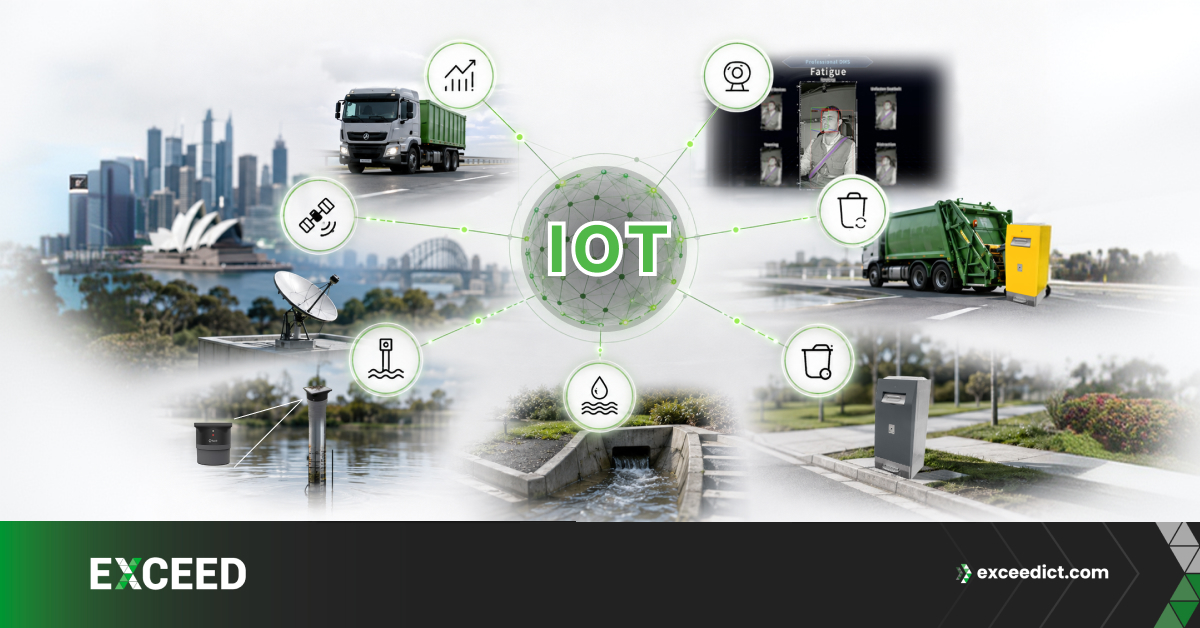
The Internet of Things (IoT) is transforming how Australian businesses operate. From connected vehicles and smart buildings to industrial automation, agriculture, mining, healthcare, and logistics, IoT services are helping organisations collect real-time data, automate operations, improve safety, and make faster business decisions.
As digital transformation accelerates across Australia, businesses are increasingly investing in IoT services to improve efficiency, reduce operating costs, and gain greater visibility into their assets. Modern IoT solutions combine smart sensors, cloud computing, artificial intelligence (AI), edge computing, and secure wireless connectivity to create intelligent business ecosystems that operate around the clock.
At EXCEED ICT, we help Australian organisations deploy scalable IoT services that integrate connected devices, cloud platforms, enterprise wireless, telematics, AI analytics, and managed IoT infrastructure into one intelligent ecosystem.
What is an IoT Service?
 An IoT service is a complete technology solution that enables physical devices to securely connect to the internet, collect operational data, communicate with cloud platforms, and automate business processes.
Rather than simply installing sensors, an IoT service provides the entire ecosystem required to manage connected devices throughout their lifecycle.
A typical IoT service includes:
- Connected sensors and smart devices
- Wireless network connectivity
- IoT gateways
- Cloud-based management platforms
- Data analytics
- AI-powered automation
- Device security
- Remote monitoring
- Firmware management
- Business dashboards
Instead of relying on manual inspections or paper-based reporting, businesses gain real-time visibility into operations from anywhere.
How IoT Services Work
Although every deployment is different, most IoT services follow a similar workflow.
Data Collection
Sensors installed on equipment continuously monitor operational conditions such as:
- Temperature
- Pressure
- Humidity
- Vehicle location
- Fuel usage
- Engine diagnostics
- Motion
- Vibration
- Energy consumption
- Water levels
- Air quality
These sensors operate continuously without requiring manual intervention.
Secure Connectivity
The collected information is transmitted through secure communications networks including:
- 4G LTE
- 5G
- NB-IoT
- LTE-M (Cat-M1)
- Wi-Fi
- LoRaWAN
- Ethernet
- Satellite connectivity
Australian businesses often rely on Telstra’s extensive national network to maintain reliable connectivity across metropolitan, regional, and remote locations.
Edge Processing
Many modern IoT solutions include edge computing capabilities.
Instead of sending every piece of information to the cloud, edge devices analyse data locally, allowing businesses to:
- Detect faults immediately
- Reduce bandwidth costs
- Improve response times
- Continue operating during network interruptions
- Trigger instant alarms
This is particularly valuable for mining, utilities, transport, and industrial automation.
Cloud Analytics
Relevant information is securely transmitted to cloud platforms where businesses can:
- View live dashboards
- Analyse historical trends
- Generate automated reports
- Predict equipment failures
- Receive alerts
- Monitor multiple sites simultaneously
Managers gain complete operational visibility regardless of location.
Business Automation
IoT platforms can automatically trigger actions based on predefined conditions.
Examples include:
- Opening gates
- Activating pumps
- Sending maintenance notifications
- Dispatching technicians
- Adjusting lighting
- Managing HVAC systems
- Recording compliance events
- Updating inventory
Automation reduces manual workloads while improving consistency and efficiency.
Core Components of an IoT Service
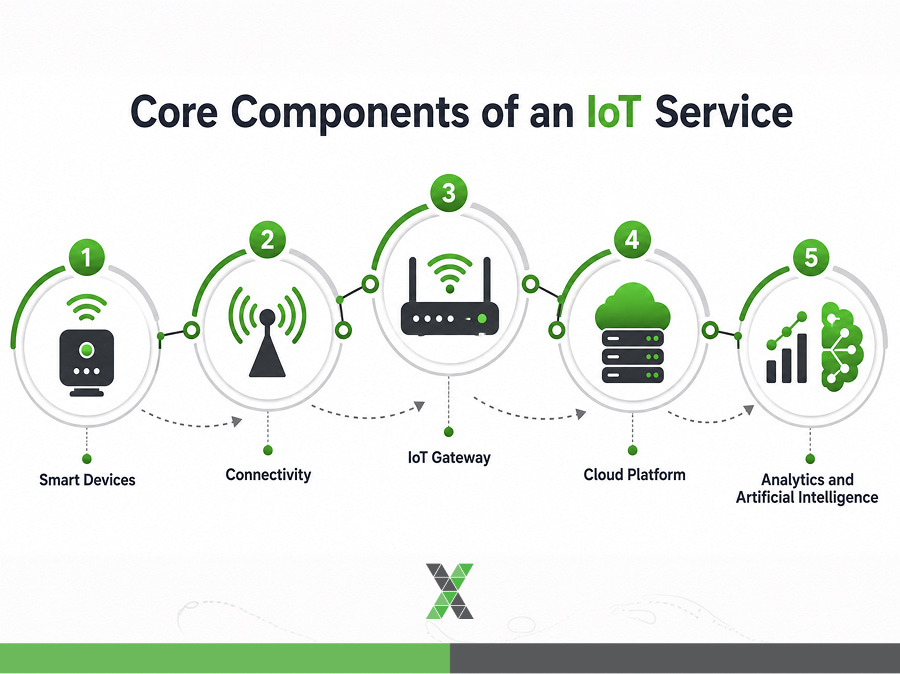 Successful IoT deployments combine multiple technologies into one integrated solution.
Smart Devices
These include:
- GPS trackers
- Environmental sensors
- Cameras
- Smart meters
- Vehicle telematics devices
- Industrial controllers
- Wearables
- Asset trackers
They continuously collect operational information.
Connectivity
Reliable communications form the backbone of every IoT deployment.
Australian businesses commonly use:
- 5G
- 4G LTE
- NB-IoT
- Cat-M1
- Satellite communications
- Private wireless networks
- LoRaWAN
The appropriate network depends on bandwidth, coverage, power consumption, and application requirements.
IoT Gateway
Gateways aggregate data from multiple devices before securely transmitting it to cloud platforms.
Benefits include:
- Protocol conversion
- Local processing
- Device authentication
- Data filtering
- Reduced network traffic
Cloud Platform
Cloud software enables organisations to:
- Manage thousands of connected devices
- Visualise operational data
- Create custom dashboards
- Generate reports
- Configure alerts
- Control remote devices
This becomes the central management platform for connected operations.
Analytics and Artificial Intelligence
AI significantly increases the value of IoT data by identifying patterns that humans often overlook.
Machine learning can:
- Predict equipment failures
- Detect abnormal operating conditions
- Forecast maintenance schedules
- Improve energy efficiency
- Identify unsafe behaviour
- Optimise fleet utilisation
This transforms raw sensor data into actionable business intelligence.
Benefits of IoT Services for Australian Businesses
Real-Time Visibility
Managers gain immediate insight into operations without visiting every location.
Live dashboards display:
- Equipment status
- Fleet locations
- Sensor readings
- Environmental conditions
- Operational performance
Better visibility supports faster decision-making.
Improved Productivity
Automation reduces repetitive manual tasks, allowing staff to focus on higher-value activities.
Businesses can automate:
- Reporting
- Maintenance scheduling
- Asset tracking
- Compliance monitoring
- Inventory management
Lower Operating Costs
IoT helps reduce costs by:
- Minimising downtime
- Improving fuel efficiency
- Reducing unnecessary travel
- Lowering maintenance expenses
- Decreasing energy consumption
Small efficiency gains across large operations often deliver substantial savings.
Enhanced Safety
Connected sensors improve workplace safety by monitoring:
- Driver behaviour
- Equipment performance
- Environmental hazards
- Worker locations
- Machinery operation
Real-time alerts enable faster responses before incidents escalate.
Predictive Maintenance
Instead of repairing equipment after failures occur, IoT predicts maintenance needs using operational data.
Benefits include:
- Longer equipment life
- Reduced downtime
- Lower repair costs
- Improved reliability
- Better spare parts planning
Better Compliance
Many Australian industries face strict regulatory requirements.
IoT simplifies compliance through automated monitoring, digital reporting, and continuous data collection for industries including:
- Transport
- Mining
- Utilities
- Healthcare
- Construction
- Government
Common IoT Applications Across Australia
Fleet Management
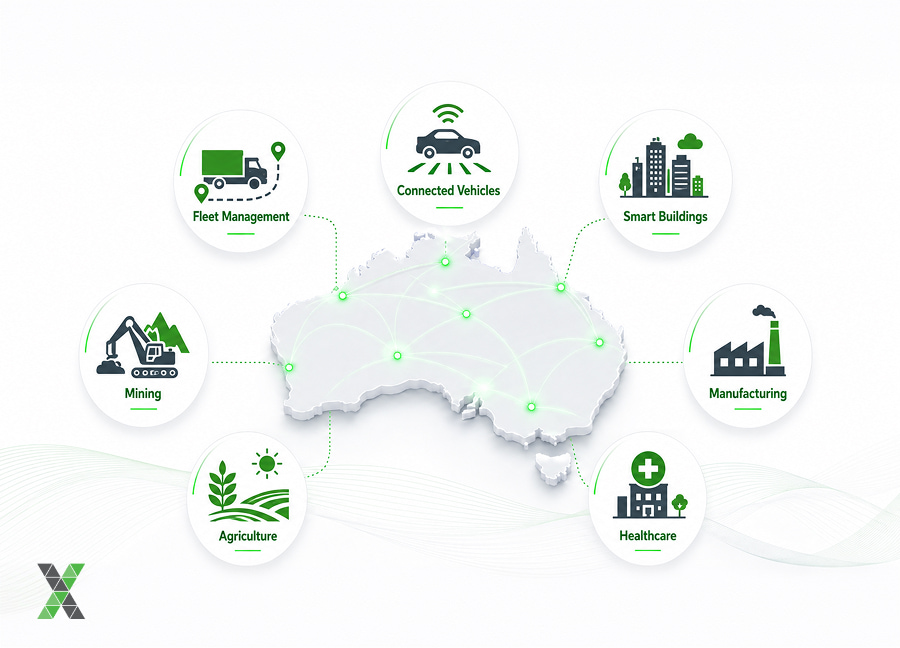 Fleet operators use IoT to monitor:
- Vehicle locations
- Driver behaviour
- Fuel consumption
- Engine diagnostics
- Route optimisation
- Maintenance schedules
Combined with AI-powered cameras and telematics, businesses improve driver safety while reducing operating costs.
Connected Vehicles
Modern commercial vehicles have become intelligent mobile assets.
IoT enables:
- Remote diagnostics
- Vehicle tracking
- Predictive maintenance
- Driver monitoring
- Cargo monitoring
- AI dash cameras
- Vehicle health reporting
These capabilities improve both operational efficiency and road safety.
Smart Buildings
Commercial buildings increasingly use IoT for:
- HVAC automation
- Energy monitoring
- Occupancy detection
- Security systems
- Lighting control
- Water management
Building owners reduce energy consumption while improving occupant comfort.
Manufacturing
Industrial IoT helps manufacturers monitor:
- Machine performance
- Production output
- Equipment utilisation
- Product quality
- Inventory
- Environmental conditions
This supports smarter manufacturing and improved productivity.
Mining
Australia’s mining industry relies heavily on IoT for:
- Remote asset monitoring
- Heavy equipment tracking
- Worker safety
- Environmental monitoring
- Fuel management
- Predictive maintenance
Connected operations reduce downtime in challenging remote environments.
Agriculture
Smart farming solutions include:
- Soil moisture sensors
- Livestock tracking
- Irrigation automation
- Weather monitoring
- Water management
- Crop health monitoring
Farmers improve productivity while reducing water and resource consumption.
Healthcare
Healthcare providers use IoT for:
- Patient monitoring
- Medical equipment tracking
- Environmental monitoring
- Medication management
- Asset visibility
Connected healthcare improves operational efficiency while enhancing patient care.
Why Security Matters in IoT
As connected devices increase, cybersecurity becomes increasingly important.
Modern IoT security includes:
- Device authentication
- Encrypted communications
- Secure firmware updates
- Identity management
- Continuous monitoring
- Access controls
- Threat detection
Protecting connected infrastructure is essential for maintaining business continuity.
Emerging IoT Trends in Australia
The Australian IoT market continues evolving through several emerging technologies.
Artificial Intelligence
AI enables smarter automation by analysing massive volumes of sensor data in real time.
Businesses gain:
- Predictive analytics
- Intelligent alerts
- Automated workflows
- Better forecasting
Edge Computing
Edge computing reduces latency by processing data closer to connected devices.
This is particularly valuable for:
- Autonomous vehicles
- Industrial automation
- Mining
- Smart transport
- Critical infrastructure
Digital Twins
Digital twins create virtual models of physical assets.
Businesses can:
- Simulate performance
- Test operational changes
- Predict failures
- Improve planning
5G Connectivity
Australia’s expanding 5G network supports:
- Higher bandwidth
- Lower latency
- More connected devices
- Faster deployments
- Improved reliability
5G is accelerating enterprise IoT adoption across multiple industries.
Why Choose EXCEED ICT for IoT Services?
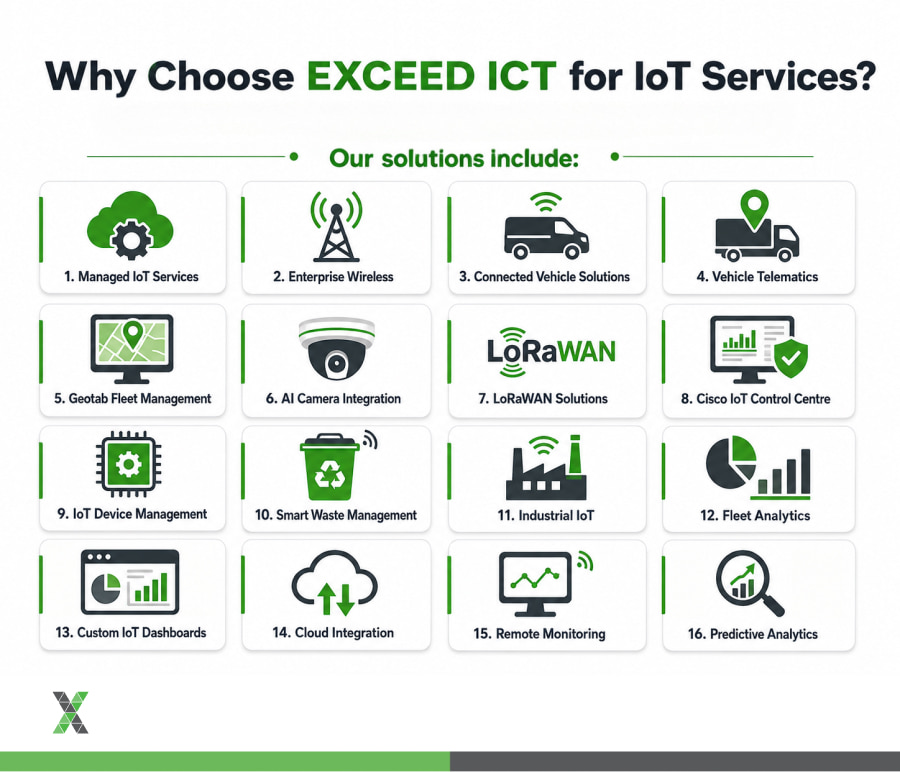 Deploying IoT successfully requires more than installing sensors. Businesses need an experienced partner capable of integrating hardware, connectivity, cloud platforms, analytics, and ongoing support into one scalable solution.
EXCEED ICT delivers complete end-to-end IoT services tailored to Australian businesses.
Our solutions include:
- Managed IoT Services
- Enterprise Wireless
- Connected Vehicle Solutions
- Vehicle Telematics
- Geotab Fleet Management
- AI Camera Integration
- LoRaWAN Solutions
- Cisco IoT Control Centre
- IoT Device Management
- Smart Waste Management
- Industrial IoT
- Fleet Analytics
- Custom IoT Dashboards
- Cloud Integration
- Remote Monitoring
- Predictive Analytics
Our IoT platform can consolidate multiple technologies into a single pane of glass, giving organisations complete visibility across connected assets, vehicles, infrastructure, sensors, and business operations.
Whether you’re managing a national fleet, deploying smart infrastructure, monitoring industrial equipment, or building intelligent cities, EXCEED ICT provides the expertise, connectivity, and technology required to deliver measurable business outcomes.
Conclusion
IoT services have become a cornerstone of digital transformation across Australia. By connecting devices, collecting real-time data, and applying advanced analytics, organisations can improve productivity, strengthen safety, reduce operational costs, and make more informed decisions.
As technologies such as AI, 5G, edge computing, and cloud platforms continue to evolve, IoT will play an even greater role in helping businesses become more connected, efficient, and resilient.
Working with an experienced technology partner like EXCEED ICT ensures your IoT deployment is secure, scalable, and aligned with your long-term business goals. Whether you’re implementing connected vehicles, industrial automation, smart infrastructure, or enterprise IoT platforms, the right solution can unlock valuable insights and drive sustainable business growth across Australia.
Transform Your Business with Intelligent IoT Solutions
Ready to unlock the full potential of the Internet of Things? EXCEED ICT delivers end-to-end IoT services that connect your devices, vehicles, assets, and operations into one intelligent platform. From fleet telematics and smart infrastructure to industrial automation and real-time analytics, our experts help Australian businesses improve efficiency, enhance safety, and accelerate digital transformation.
Contact EXCEED ICT today to discuss your IoT requirements and discover how our connected technology solutions can help your business operate smarter, faster, and more efficiently.