


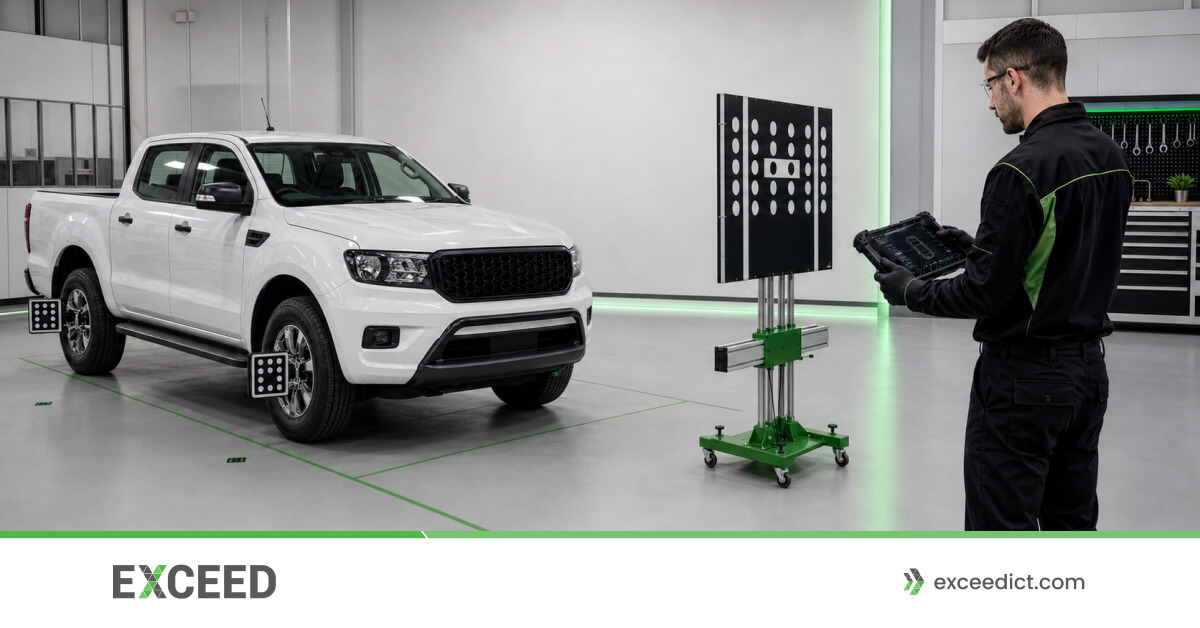
Modern vehicles are becoming increasingly intelligent, with advanced technologies helping drivers avoid accidents, reduce fatigue, and improve overall road safety. At the heart of these innovations is ADAS calibration, a critical process that ensures your vehicle’s cameras, radar sensors, and other driver assistance technologies work exactly as the manufacturer intended.
As Advanced Driver Assistance Systems (ADAS) become standard across passenger vehicles, commercial fleets, mining equipment, government vehicles, and transport operations throughout Australia, proper calibration is no longer optional. Whether your vehicle has undergone a windscreen replacement, collision repair, wheel alignment, or suspension work, recalibrating the ADAS system is essential to maintain safety, compliance, and optimal performance.
For Australian businesses operating connected fleets, ADAS calibration also plays a key role in supporting intelligent fleet management. Combined with connected vehicle technologies, AI-powered cameras, and IoT platforms, accurately calibrated ADAS systems help organisations reduce accidents, improve driver behaviour, lower maintenance costs, and enhance operational efficiency.
What Is ADAS Calibration?
ADAS calibration is the process of precisely aligning and configuring the cameras, radar sensors, LiDAR, ultrasonic sensors, and electronic control units that power a vehicle’s Advanced Driver Assistance Systems.
These sensors continuously monitor the vehicle’s surroundings and provide real-time information to safety systems such as:
- Autonomous Emergency Braking (AEB)
- Lane Keep Assist (LKA)
- Lane Departure Warning (LDW)
- Adaptive Cruise Control (ACC)
- Blind Spot Monitoring (BSM)
- Traffic Sign Recognition (TSR)
- Driver Monitoring Systems (DMS)
- Pedestrian Detection
- Cyclist Detection
- Rear Cross Traffic Alert
- Intelligent Speed Assistance
- Parking Assistance
Even a slight sensor misalignment can cause these systems to interpret road conditions incorrectly. A camera positioned just a few millimetres off its factory alignment may detect lane markings incorrectly, misjudge the distance to another vehicle, or fail to recognise pedestrians in time.
Proper calibration restores factory accuracy and ensures every safety feature performs as designed.
Why ADAS Calibration Is So Important?
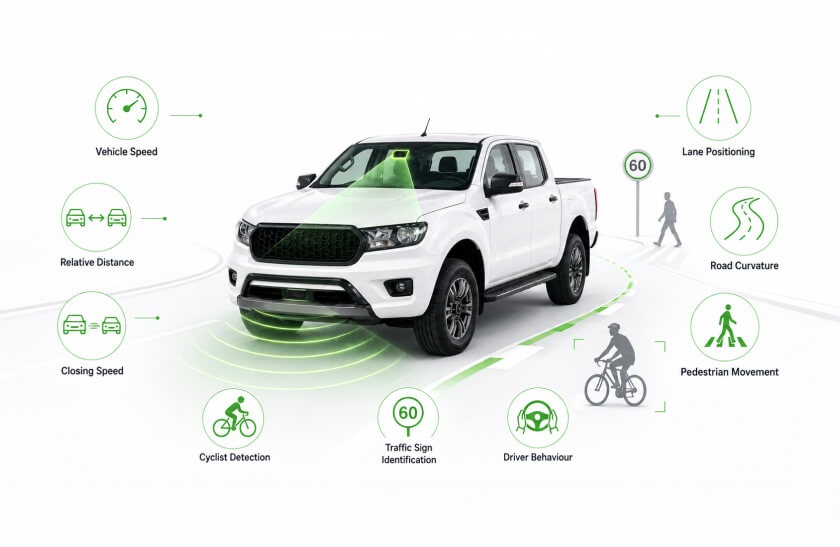 Modern ADAS technologies make thousands of calculations every second.
The cameras and radar sensors determine:
- Vehicle speed
- Relative distance
- Closing speed
- Lane positioning
- Road curvature
- Pedestrian movement
- Cyclist detection
- Traffic sign identification
- Driver behaviour
These calculations rely on extremely precise measurements. If a forward-facing camera shifts only a fraction of a degree after a windscreen replacement, its viewing angle changes significantly over long distances.
For example, an object detected 100 metres ahead may appear several metres away from its actual position. That difference can determine whether a vehicle brakes safely or fails to react in time.
Proper ADAS calibration ensures:
- Accurate collision detection
- Reliable emergency braking
- Correct lane positioning
- Consistent adaptive cruise control
- Improved driver confidence
- Reduced accident risk
- Better fleet safety performance
Common Situations That Require ADAS Calibration
Many vehicle owners are unaware that routine repairs can affect sensor alignment.
The most common situations include:
Windscreen Replacement
- Most modern vehicles mount the forward-facing camera directly behind the windscreen.
- Replacing the glass changes the camera’s position, requiring recalibration before the vehicle returns to the road.
Collision Repairs
- Even a minor parking impact can move radar brackets or camera mounts.
- Although the damage may appear cosmetic, sensor alignment may no longer meet manufacturer specifications.
Wheel Alignment
- Changing steering geometry affects the relationship between the vehicle and its sensors.
- Many manufacturers recommend ADAS calibration following wheel alignment.
Suspension Repairs
Replacing:
- Springs
- Shock absorbers
- Control arms
- Struts
- Bushings
can alter ride height and vehicle geometry.
Since cameras reference the road surface, these changes influence sensor accuracy.
Sensor Replacement
Any replacement of:
- Cameras
- Radar modules
- Ultrasonic sensors
- LiDAR sensors
requires calibration.
Bumper Repairs
- Front and rear bumpers often contain radar modules.
- Removing or replacing bumper components can change radar alignment.
Dashboard Warning Lights
- If an ADAS warning appears after servicing or repairs, calibration should be completed immediately.
Types of ADAS Calibration
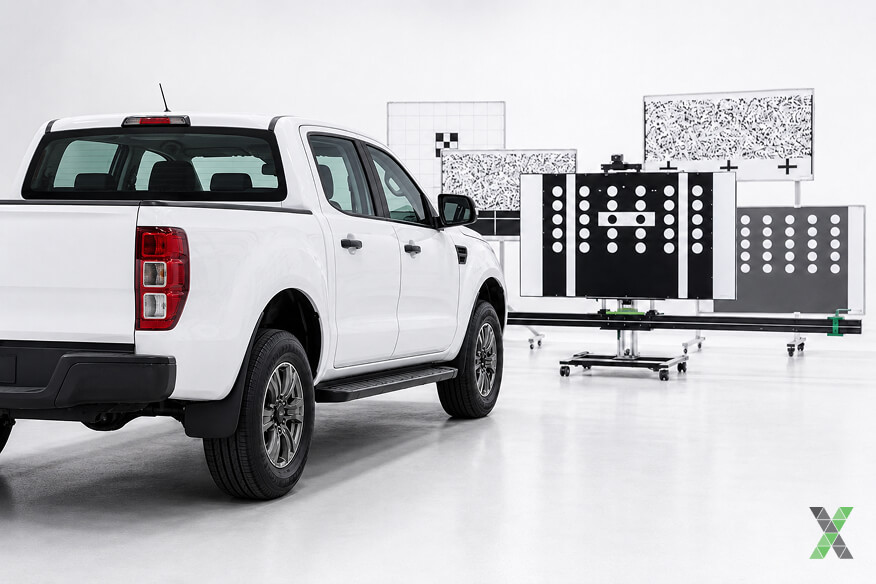 Manufacturers generally specify three calibration methods.
Static Calibration
Static calibration is performed inside a controlled workshop environment. Technicians position specialised targets at precise distances from the vehicle while using diagnostic software to align sensors.
Requirements typically include:
- Perfectly level workshop floor
- Controlled lighting
- Manufacturer-approved targets
- Laser measuring equipment
- Diagnostic scan tools
- Exact tyre pressures
- Correct vehicle loading
Static calibration is commonly used for:
- Front cameras
- Radar sensors
- Surround-view cameras
- Parking cameras
Dynamic Calibration
Dynamic calibration takes place while driving. The technician connects a diagnostic tool and drives the vehicle under specific conditions.
Manufacturers usually require:
- Clearly marked roads
- Suitable weather
- Consistent speeds
- Limited traffic
- Specific travel distances
During the drive, the vehicle learns lane markings, road geometry, and surrounding traffic.
Initialisation
Some systems require software initialisation.
This process registers:
- New sensor modules
- Camera replacements
- Radar replacements
- Software updates
The vehicle stores new baseline parameters before completing static or dynamic calibration.
How ADAS Calibration Works?
Professional calibration follows a structured process. First, technicians inspect the vehicle and identify any damaged sensors or mounting brackets. Next, they perform a diagnostic scan to detect fault codes. The vehicle is then prepared according to manufacturer specifications.
Preparation may include:
- Correct tyre pressures
- Full fuel tank
- Empty cargo area
- Clean sensors
- Correct ride height
Calibration equipment is positioned accurately around the vehicle. The technician follows the OEM calibration procedure using manufacturer-approved software. After calibration, another diagnostic scan verifies successful completion. Finally, a road test confirms that every safety system operates correctly.
Static vs Dynamic Calibration
Both methods are important and often complement each other. Static calibration provides extremely accurate alignment within a controlled workshop. Dynamic calibration validates the system using real-world driving conditions. Many vehicles require both procedures before calibration is considered complete.
The Technology Behind ADAS Calibration
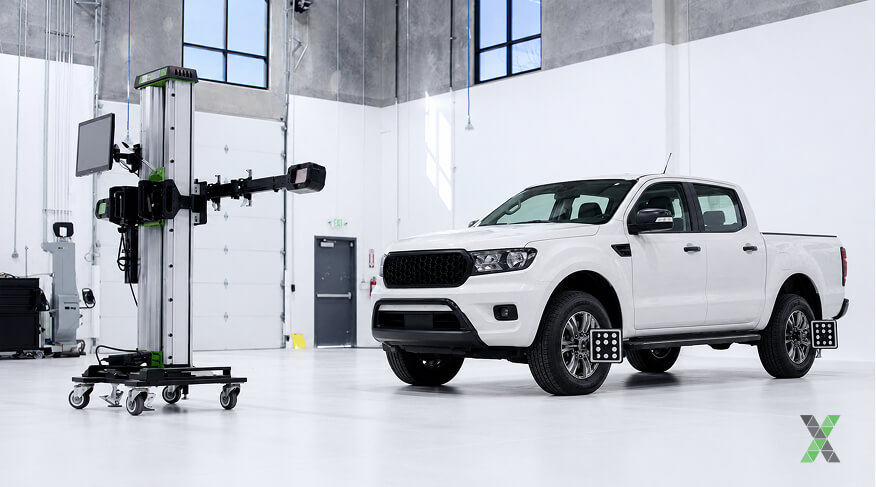 Modern ADAS systems combine multiple technologies to create a complete understanding of the driving environment.
These include:
Cameras
High-resolution cameras identify:
- Lane markings
- Road signs
- Pedestrians
- Cyclists
- Traffic signals
- Vehicles
Radar
Radar measures:
- Distance
- Relative speed
- Object movement
- Traffic flow
Radar performs reliably in:
- Heavy rain
- Fog
- Dust
- Low light
LiDAR
Some advanced vehicles also use LiDAR to generate precise three-dimensional maps of the surrounding environment.
Ultrasonic Sensors
These sensors support:
- Parking assistance
- Obstacle detection
- Low-speed manoeuvring
Each technology contributes unique data, allowing the vehicle to make intelligent driving decisions in real time.
Why Calibration Matters for Commercial Fleets?
For fleet operators, ADAS calibration is more than a workshop procedure it is a key component of risk management. Commercial fleets rely on safety technologies to protect drivers, vehicles, cargo, and the public.
Incorrectly calibrated systems can lead to:
- Increased accident rates
- False safety alerts
- Reduced driver confidence
- Insurance complications
- Higher repair costs
- Greater vehicle downtime
Routine calibration helps maintain consistent performance across an entire fleet.
ADAS Calibration and Connected Vehicles
Australia is rapidly adopting connected vehicle technology across logistics, mining, utilities, emergency services, and public transport.
Connected vehicles continuously exchange information between:
- Vehicle sensors
- Fleet management platforms
- AI analytics
- Cloud systems
- IoT gateways
- Traffic infrastructure
Accurate ADAS calibration improves the quality of this data.
Reliable sensor information supports:
- Driver behaviour monitoring
- Fleet analytics
- Predictive maintenance
- Route optimisation
- Incident reporting
- Remote diagnostics
Poorly calibrated sensors can compromise both safety systems and the quality of fleet intelligence.
How EXCEED ICT Supports Smarter Fleet Safety?
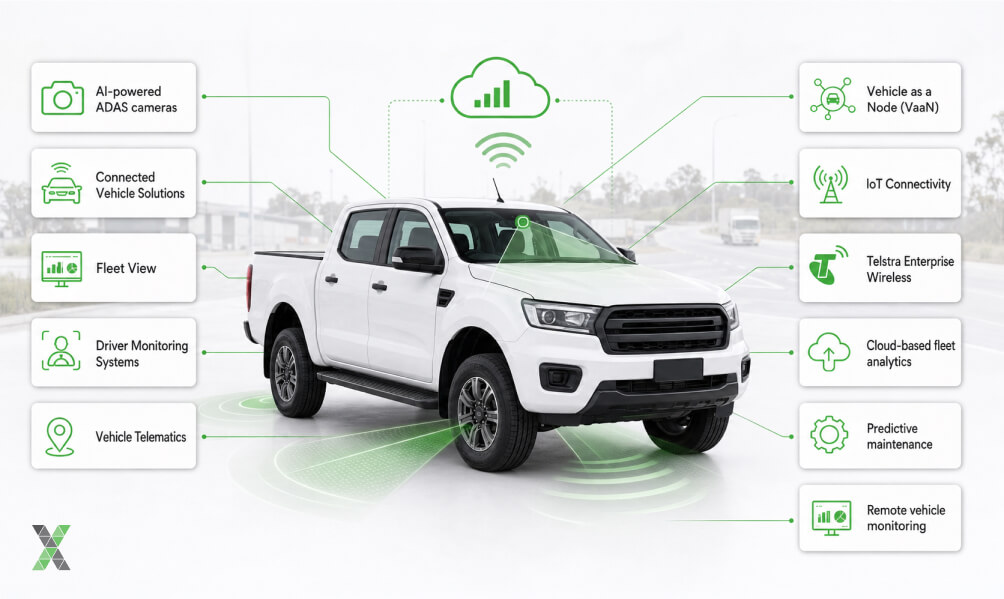 As Australian organisations embrace connected mobility, ADAS technologies become increasingly valuable when integrated into broader fleet management strategies.
EXCEED ICT helps businesses improve road safety through intelligent connected vehicle solutions that combine:
- AI-powered ADAS cameras
- Connected Vehicle Solutions
- Fleet View
- Driver Monitoring Systems
- Vehicle Telematics
- Vehicle as a Node (VaaN)
- IoT Connectivity
- Telstra Enterprise Wireless
- Cloud-based fleet analytics
- Predictive maintenance
- Remote vehicle monitoring
Rather than relying solely on individual safety devices, EXCEED ICT enables organisations to create an integrated connected fleet ecosystem where vehicle data, AI analytics, and real-time insights work together to improve operational performance.
This integrated approach helps organisations:
- Improve driver safety
- Reduce accident risks
- Increase compliance
- Optimise fleet utilisation
- Lower maintenance costs
- Improve operational visibility
- Support informed business decisions
The Future of ADAS Calibration in Australia
Vehicle technology continues to evolve rapidly.
Future vehicles will feature:
- Higher-resolution cameras
- Advanced AI processing
- Expanded sensor fusion
- Vehicle-to-Vehicle (V2V) communication
- Vehicle-to-Infrastructure (V2I) connectivity
- Autonomous driving capabilities
As these technologies become more sophisticated, calibration standards will become even more precise.
Commercial fleet operators, councils, mining companies, logistics providers, utilities, and government organisations will increasingly rely on accurate calibration to maximise the value of connected vehicle technologies.
Proper ADAS calibration will remain fundamental to delivering safer roads, smarter fleets, and more efficient transport systems across Australia.
Conclusion
ADAS calibration is an essential part of maintaining the safety, reliability, and performance of modern vehicles. Whether your vehicle has undergone a windscreen replacement, collision repair, wheel alignment, or suspension work, recalibrating cameras and sensors ensures that features such as Autonomous Emergency Braking, Lane Keep Assist, Adaptive Cruise Control, and Blind Spot Monitoring continue to operate accurately.
For Australian businesses managing connected fleets, calibration is only one part of a broader intelligent mobility strategy. When combined with AI-powered cameras, telematics, IoT connectivity, and cloud-based analytics, calibrated ADAS systems deliver valuable insights that improve driver safety, reduce operational costs, strengthen compliance, and optimise fleet performance.
By integrating advanced vehicle technologies with connected mobility solutions, organisations can build safer, smarter, and more efficient transport operations while preparing for the future of intelligent transportation in Australia.
Improve Fleet Safety with Intelligent ADAS Solutions
Ready to enhance road safety and maximise fleet performance? EXCEED ICT delivers intelligent ADAS camera solutions, connected vehicle technologies, AI-powered video analytics, and real-time fleet monitoring tailored for Australian businesses. Whether you manage commercial fleets, mining vehicles, government assets, or transport operations, our integrated solutions help reduce accidents, improve driver behaviour, strengthen compliance, and optimise operational efficiency.
Contact EXCEED ICT today to learn how our advanced ADAS, telematics, IoT connectivity, and connected vehicle solutions can help your organisation build a safer, smarter, and more connected fleet.
Call us on 1300 832 639 or simply search “Exceed ICT” on Google Maps to find a location near you and connect with our team today.
We also provide Managed Services, Asset Management, IoT Helpdesk, Fleet Management, Project Management, Telecoms Expense Management.
Improve Your Business Core values, Business Consulting, Network Management, Telstra Adaptive Mobility, Device Enrolment, and many more Solutions.
Find us (Exceed ICT) on Google map.