



Traditional device management solutions often require organisations to manage an employee’s entire mobile device. While this approach works well for company-owned devices, it is less suitable for personal smartphones where employees expect privacy. This is where Mobile Application Management (MAM) provides a smarter and more flexible approach.
A Mobile Application Management solution secures corporate applications and business data at the application level rather than managing the entire device. Employees can continue using their personal devices while IT administrators maintain full control over business applications, access permissions, and sensitive corporate information.
This guide explains how Mobile Application Management works, its key features, business benefits, compliance considerations, and why Australian organisations are increasingly adopting MAM as part of their enterprise mobility strategy.
What is Mobile Application Management (MAM)?
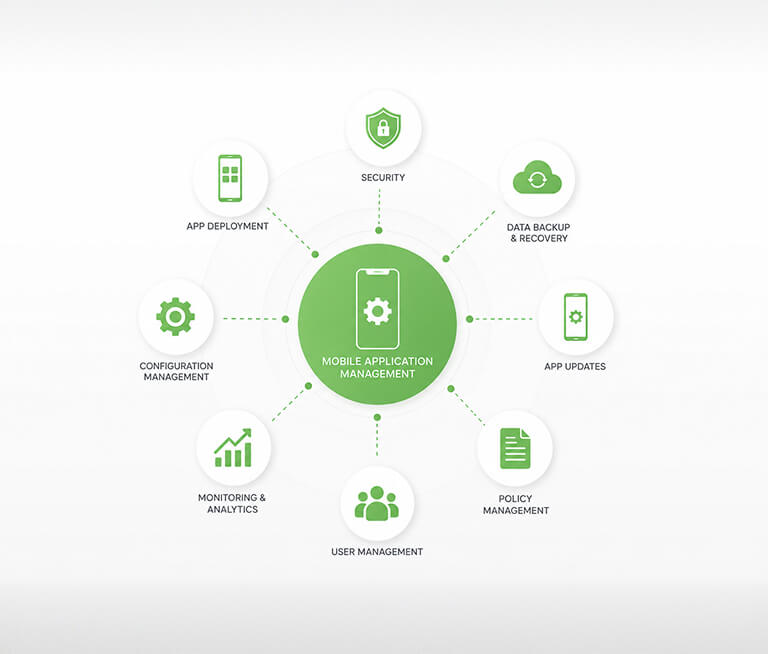 Mobile Application Management (MAM) is an enterprise mobility solution that enables organisations to deploy, manage, secure, and monitor business applications on mobile devices.
Unlike Mobile Device Management which manages the entire smartphone or tablet, MAM focuses only on business applications and the data stored within them. This allows organisations to protect sensitive information without accessing employees’ personal photos, messages, contacts, or applications.
MAM is particularly valuable for businesses operating under Bring Your Own Device (BYOD) policies, where employees use personal smartphones to access corporate resources.
How Mobile Application Management Works?
Rather than managing the entire operating system, MAM applies security policies directly to business applications.
When users install approved corporate apps, those applications operate inside a secure, encrypted environment. Administrators can configure security rules, require authentication, encrypt business data, restrict sharing, and remotely remove corporate information if necessary.
This application-level approach protects business assets without interfering with personal device usage.
Why Mobile Application Management Is Important
Australian businesses are becoming increasingly mobile. Employees expect to access Microsoft 365, Teams, CRM systems, cloud storage, and business applications wherever they work.
At the same time, cyber threats targeting mobile devices continue to increase. Stolen devices, malicious applications, unsecured public Wi-Fi, and phishing attacks can all expose sensitive business information.
Mobile Application Management addresses these challenges by creating a secure environment for business applications while allowing employees to maintain complete control over their personal devices.
The result is stronger security, improved productivity, and greater employee confidence in BYOD programs.
Key Features of Mobile Application Management
Application Containerisation

Application containerisation separates business applications from personal applications.
Corporate emails, files, documents, and messaging remain inside an encrypted workspace, preventing accidental or unauthorised sharing with personal apps.
This separation significantly reduces the risk of data leakage.
Enterprise App Distribution
MAM platforms allow organisations to publish approved applications through a private enterprise app catalogue.
Employees can quickly install business applications while IT teams maintain complete control over application versions, licensing, and updates.
Selective Remote Wipe
One of the biggest advantages of MAM is selective wipe functionality.
If a device is lost, stolen, or an employee leaves the organisation, administrators can remotely remove corporate applications and business data without affecting personal content stored on the device.
Data Loss Prevention (DLP)
Data Loss Prevention policies reduce the risk of sensitive information leaving approved applications.
Administrators can restrict:
- Copy and paste
- Screenshots
- Printing
- File downloads
- Sharing documents with personal applications
- Cloud storage transfers
These controls help protect confidential company information.
Secure Authentication
Modern MAM solutions support advanced identity management features including:
- Multi-Factor Authentication (MFA)
- Single Sign-On (SSO)
- Biometric authentication
- Conditional access
- Risk-based authentication
Only authorised users can access business applications.
Mobile Application Management vs Mobile Device Management
Although both solutions improve mobile security, they serve different purposes.
Mobile Device Management controls the entire device, making it ideal for company-owned smartphones and tablets.
Mobile Application Management secures only business applications, making it the preferred option for organisations supporting BYOD, contractors, consultants, and hybrid workforces.
Many Australian organisations deploy both technologies together to achieve comprehensive endpoint security.
Benefits of Mobile Application Management for Australian Businesses
- Improved Data Security: Sensitive business information remains encrypted and protected inside secure corporate applications.
- Greater Employee Privacy: Employees maintain control over their personal devices while organisations secure only corporate applications.
- Strong Support for BYOD: Businesses can confidently implement Bring Your Own Device policies without compromising security.
- Simplified IT Administration: Applications, updates, permissions, and security policies can all be managed from a central administration console.
- Faster Application Deployment: New employees can receive business applications quickly without lengthy device setup procedures.
- Reduced IT Costs: Using personal devices reduces hardware investment while maintaining enterprise-level security.
- Better Business Productivity: Employees enjoy secure access to business applications from virtually any location, supporting flexible work arrangements.
Common Use Cases of MAM in Australia
- BYOD Environments: Employees use personal devices for work while corporate data remains secure within managed apps.
- Remote and Hybrid Workforces: MAM enables secure access to business applications from any location.
- Contractor and Temporary Access: Businesses can provide secure, time-limited access to applications without managing the entire device.
- Enterprise App Management: Organisations can control the distribution and usage of internal applications across teams.
Mobile Application Management and Australian Compliance
Australian organisations must comply with various privacy and cyber security requirements when managing mobile applications.
A well-designed MAM strategy helps organisations support compliance with:
- Privacy Act 1988
- Australian Privacy Principles (APPs)
- Australian Signals Directorate (ASD) guidance
- ACSC security recommendations
- Essential Eight mitigation strategies
By protecting business information while respecting employee privacy, MAM supports modern governance and risk management objectives.
Industries That Benefit from MAM
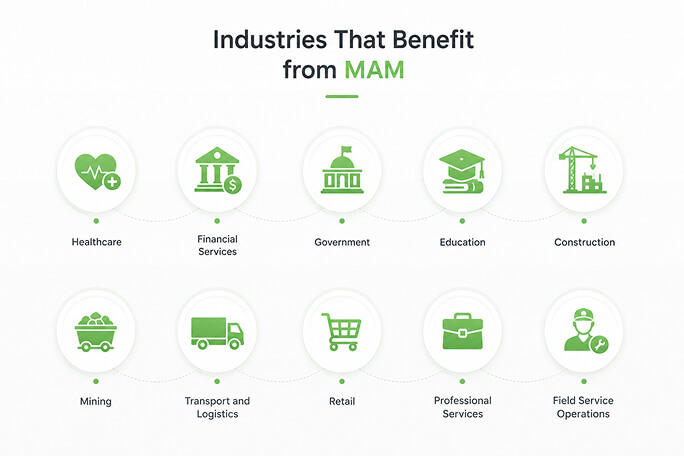 Mobile Application Management supports organisations across many industries, including:
- Healthcare
- Financial services
- Government
- Education
- Construction
- Mining
- Transport and logistics
- Retail
- Professional services
- Field service operations
Any organisation with mobile employees or remote workers can benefit from stronger application security.
Best Practices for Implementing MAM
Successful Mobile Application Management deployments should include:
- Clearly defined BYOD policies
- Strong authentication requirements
- Regular application updates
- Employee cyber security awareness training
- Role-based access control
- Continuous monitoring
- Regular compliance reviews
- Integration with Microsoft Intune or Unified Endpoint Management (UEM) platforms
These best practices help maximise both security and usability.
The Future of Mobile Application Management
As Australian businesses continue their digital transformation journey, Mobile Application Management will play an increasingly important role in enterprise cyber security.
Emerging technologies such as Artificial Intelligence (AI), Zero Trust security, behavioural analytics, cloud-native management platforms, and Unified Endpoint Management (UEM) will further strengthen mobile application security.
Organisations adopting these technologies today will be better positioned to support future workforce mobility while protecting valuable business information.
Conclusion
Mobile Application Management has become a critical component of modern enterprise mobility strategies. By securing business applications instead of entire devices, organisations can protect sensitive corporate information while respecting employee privacy.
Whether supporting BYOD, hybrid work, or remote teams, MAM delivers the flexibility, security, and compliance Australian businesses need to operate confidently in an increasingly mobile world. Investing in a comprehensive Mobile Application Management solution helps reduce cyber risk, improve productivity, simplify IT management, and support long-term business growth.
Secure Your Business Apps with Exceed ICT
Protect your corporate applications without compromising employee privacy. Exceed ICT delivers tailored Mobile Application Management (MAM) solutions that help Australian businesses secure enterprise apps, support BYOD environments, simplify IT administration, and maintain compliance. Whether you’re enabling a hybrid workforce or strengthening mobile security, our experts can design and implement the right solution for your organisation.
Contact Exceed ICT today to discover how Mobile Application Management can enhance security, improve productivity, and support your digital transformation.
Call us on 1300 832 639 or simply search “Exceed ICT” on Google Maps to find a location near you and connect with our team today.
We also provide Managed Services, Asset Management, IoT Helpdesk, Fleet Management, Project Management, Telecoms Expense Management.
Improve Your Business Core values, Business Consulting, Network Management, Telstra Adaptive Mobility, Device Enrolment, and many more Solutions.
Find us (Exceed ICT) on Google map.